
Pasta, Egg fresh & dried
Introduction
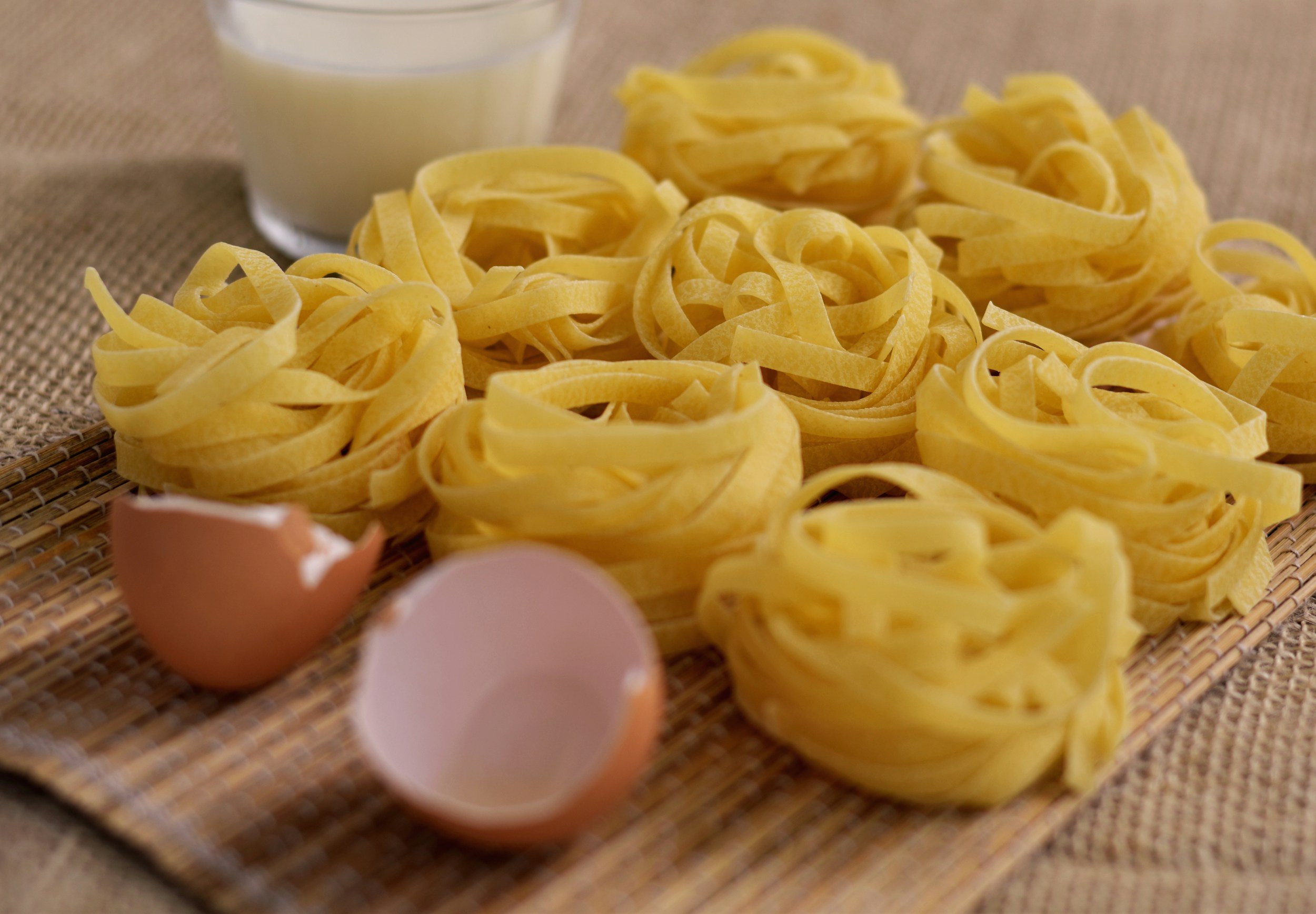
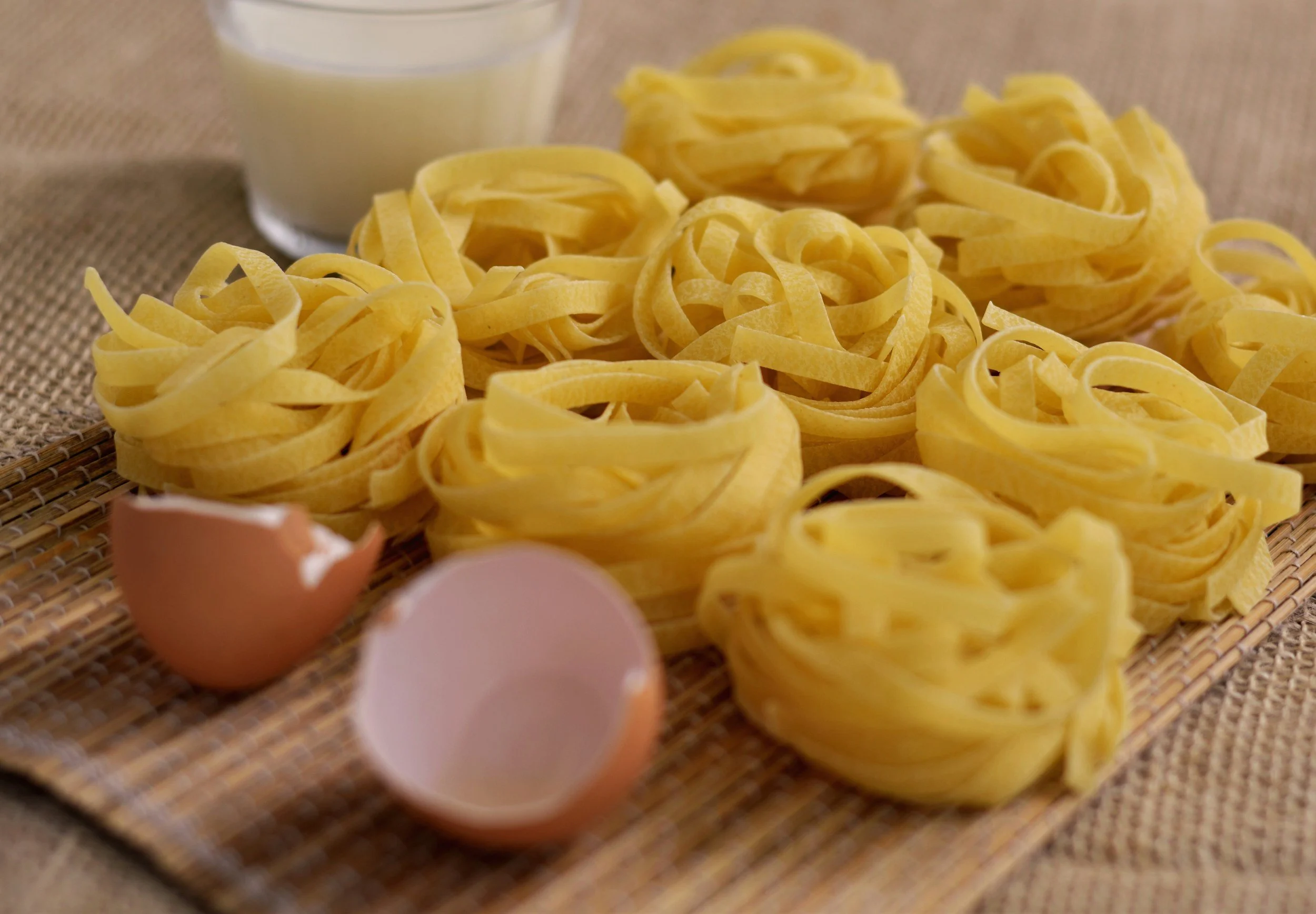
Egg pasta is a type of pasta made by enriching wheat flour with whole eggs or egg yolks, classed as a grain-based, savoury food rather than a fruit or animal product (though it contains animal-derived eggs). It should be cooked—boiling for a few minutes—rather than eaten raw, as the raw dough is dense and may contain uncooked egg.
Standout features include a rich golden-yellow hue and a slightly firmer, silkier texture than plain durum semolina pasta; the colour comes from the natural pigments in egg yolks (carotenoids) and, sometimes, from using higher-protein or wholemeal flours.
Nutritionally, egg pasta provides primarily carbohydrates from wheat, with added protein and fat from the eggs; it supplies B vitamins (notably B12 and riboflavin from the eggs), iron, phosphorus and small amounts of vitamin A and choline, while offering more protein and slightly higher fat than plain pasta.
Nutrition Snapshot per 100g (Fresh Egg, Raw)
Kcal 282 kcal
Protein 10.6g - Balance 14.3%
Fat 2.90g - Balance 8.80%
Carbohydrates 57.0g - Balance 76.9%
Percentages reflect this food’s Balance*
Fibre 3.3g
Total Sugars 2.1g
Saturated Fat 0.71g
Salt 60.0mg
Nutritional values are per 100g and sourced from UK CoFID data.
Carbohydrates value includes Fibre (AOAC method).
Carbohydrates value includes Total Sugars including naturally occurring sugars such as glucose, fructose, lactose or sucrose.
Nutrition Snapshot per 100g (Dried Egg, Raw)
Kcal 365 kcal
Protein 12.9 g | Balance = 13.47 %
Fat 3.60 g | Balance = 8.46%
Carbohydrates 74.8 g | Balance = 78.08%
Percentages reflect this food’s Balance*
Fibre 3.9 g
Total Sugars 2.1 g
Saturated Fat 0.89 g
Salt 127.5 mg
Nutritional values are per 100g and sourced from UK CoFID data.
Carbohydrates value includes Fibre (AOAC method).
Carbohydrates value includes Total Sugars including naturally occurring sugars such as glucose, fructose, lactose or sucrose.
Balance*
The Balance value expresses how protein, carbohydrate and fat contribute to a food’s total energy.
Using CoFID data per 100g, each macronutrient is converted into energy using the standard Atwater convention (protein × 4 kcal, carbohydrate × 4 kcal, fat × 9 kcal). The energy from each macronutrient is then calculated as a percentage of the total macro energy.
This provides a simple way to see whether a food is predominantly carbohydrate-based, protein-based or fat-based.
It does not determine whether a food is “good” or “bad”, but helps visualise its macronutrient profile within a broader eating pattern.
When assessing a full meal or daily intake, portion sizes should be taken into account.
Why this matters
Understanding the structure of individual foods can help you make more confident decisions when adjusting to a health diagnosis or long-term condition.
If you are organising meals, tracking intake or reflecting on patterns, you may find the Aardelia digital journals helpful.
Explore Grains Category
Back to the Food page.